Site Restoration | Hazardous Waste REMOVAL
S. Carolina Abandoned Site Remediation Project
1,000+ Containers and 55 Truckloads Removed in 30 Days – EPA-Supervised Cleanup
Project Overview
A South Carolina bank foreclosed on a 2-acre industrial property that had been abandoned for years. What they inherited was a liability nightmare:
- 1,000+ containers filled with unknown chemicals
- Massive piles of trash and debris covering the entire site
- Deteriorating drums leaking ammonia, acids, and flammable materials
- EPA on-site supervision required due to hazard severity
The property couldn't be sold, rented, or even safely accessed. It was a toxic liability dragging down the bank's balance sheet.
We cleared the entire site in 30 days—removing every container, testing every chemical, disposing of all waste in full compliance with federal and state regulations, and delivering a clean bill of health from EPA.
Project Snapshot
Timeline:
30 days from mobilization to EPA clearance
Hazardous containers:
1,000+ drums and vessels
Debris removed:
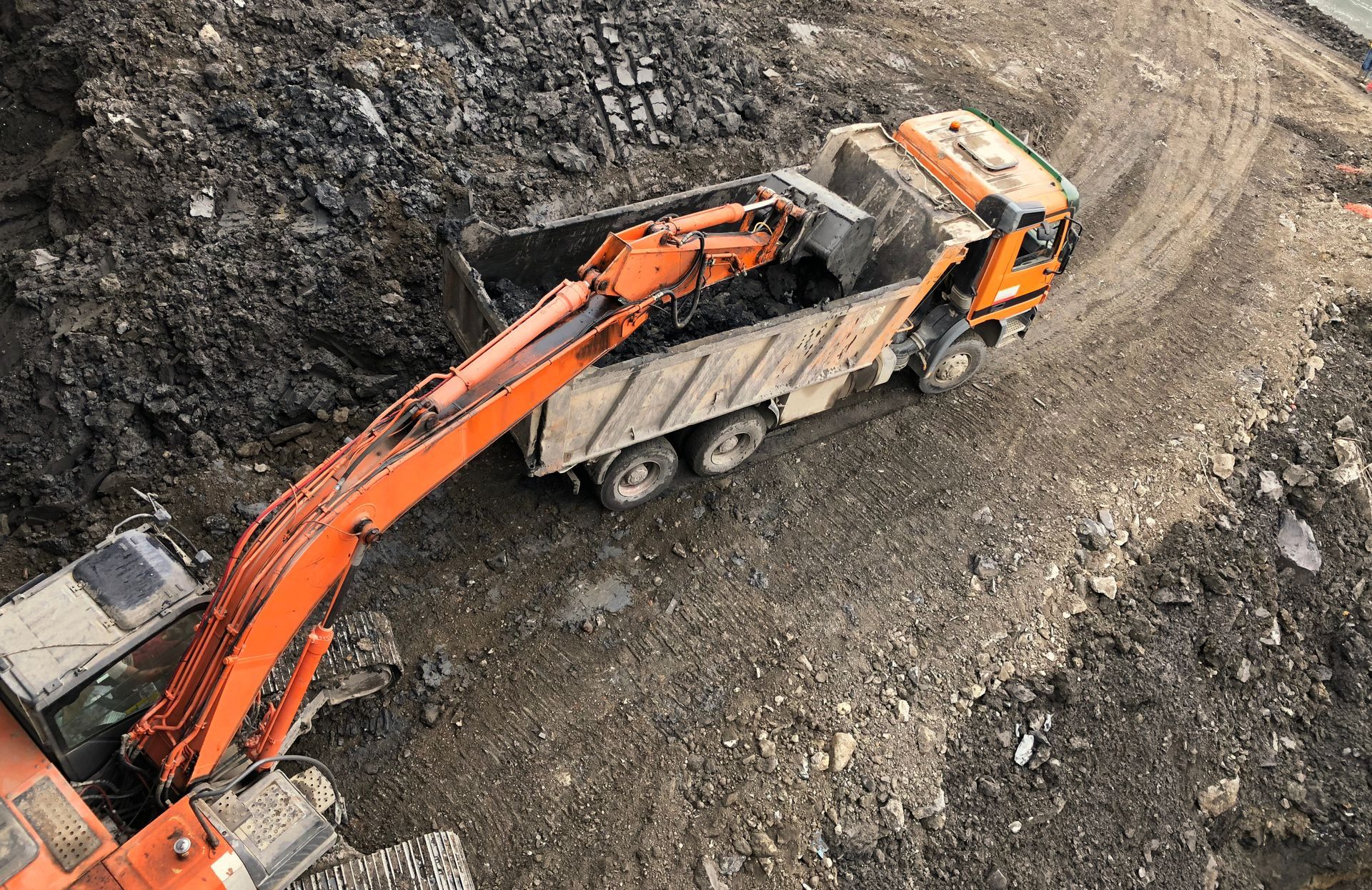
1,100+ cubic yards (55 truckloads)
EPA supervision:
Full compliance, zero violations
Result:
Property moved from liability to asset, ready for sale
| Detail | Specification |
|---|---|
| Location | South Carolina |
| Property Size | 2 acres |
| Client | Road salt (sodium chloride de-icing agent) |
| Hazardous Containers | 1,000+ drums, totes, and vessels |
| Waste Types | Ammonia, acids, solvents, flammables, corrosives, unknowns |
| Container Condition | Heavily deteriorated—some completely destroyed |
| Additional Debris | Mechanical grinding to restore free-flowing state |
| Equipment | EPA on-site throughout project |
| Challenge | Multi-hazard cleanup with unknown chemicals and strict oversight |
| Our Solution | Field testing, lab analysis, repacking, manifesting, disposal |
| Timeline | 30 days |
The Challenge:
A Toxic Abandoned Site With Unknown Risks
When the bank foreclosed on the property, they expected a standard industrial site. What they got was an environmental disaster:
What we found on arrival:
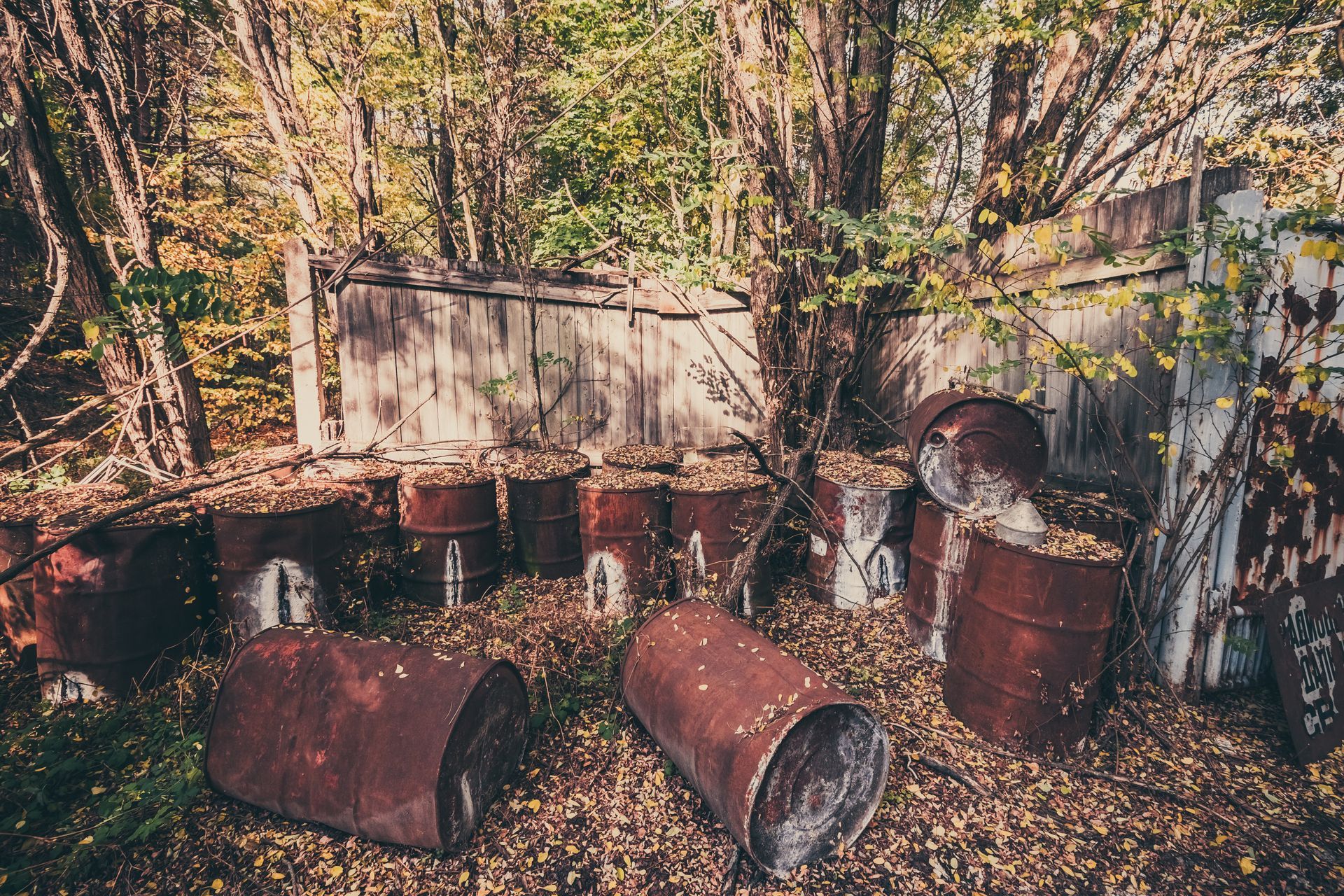
- Over 1,000 containers scattered across 2 acres
- Unknown contents in most drums—labels faded, corroded, or missing
- Severely damaged containers—rusted through, leaking, collapsed
- Piles of debris—scrap metal, construction waste, household trash mixed with industrial materials
- Exposed chemicals—liquids pooling on ground, fumes in the air
- No site records—previous operator left no inventory or documentation
Why this was a major problem:
- Health and safety risks – Workers, neighbors, and passing traffic exposed to toxic fumes and spills
- Environmental contamination – Chemicals leaching into soil and potentially reaching groundwater
- Legal liability – Bank responsible for cleanup under CERCLA (Superfund law)
- Property value – Site couldn't be sold or leased until certified clean
- Unknown costs – Impossible to estimate cleanup expenses without identifying waste types
EPA involvement:
Due to the severity and uncertainty, the U.S. Environmental Protection Agency placed the site under direct oversight. This meant:
- EPA personnel on-site to supervise all work
- Strict compliance with RCRA, DOT, and CERCLA regulations
- Real-time approvals required for handling and disposal decisions
- Full documentation of every container, test result, and disposal destination
Most contractors would walk away. This wasn't a routine cleanup—it was a multi-hazard, high-liability project requiring specialized expertise, extensive testing, and flawless regulatory compliance.
Our Approach:
Systematic Identification, Repacking, and Disposal
U.S. Waste Industries was uniquely qualified for this project. Our team includes OSHA HAZWOPER-certified field technicians, in-house analytical capabilities, and decades of experience managing complex hazardous waste scenarios.
We developed a comprehensive plan and executed it under EPA supervision from day one.
Step 1: Site Assessment and Safety Protocols
Before touching a single container, we:
- Established safety perimeter – Fenced and posted warning signs
- Set up decontamination station – For personnel and equipment leaving the site
- Deployed air monitoring – Continuous testing for VOCs, ammonia, and other airborne hazards
- Staged emergency response equipment – Spill kits, containment berms, fire suppression, medical support
All field personnel wore Level C or Level B personal protective equipment depending on exposure risk.
Step 2: Container-by-Container Inventory and Testing
Every single container required individual assessment. Our process:
Visual inspection:
- Recorded container type, size, and condition
- Noted visible labels, markings, or color-coding
- Documented leaks, damage, or instability
- Photographed each container for records
Field testing:
- pH strips – Identified acids and bases
- Colorimetric tubes – Detected specific chemicals (ammonia, chlorine, solvents)
- Flash point testing – Determined flammability risk
- Reactivity screening – Tested for explosive or shock-sensitive materials
Laboratory analysis:
- Collected samples from containers with unknown or ambiguous contents
- Sent samples to certified labs for full characterization:
- TCLP (Toxicity Characteristic Leaching Procedure)
- Ignitability, corrosivity, reactivity testing
- Specific chemical identification (GC/MS analysis)
This combination of field and lab testing allowed us to accurately classify every container as:
- RCRA hazardous waste (requires EPA manifest and TSDF disposal)
- Non-hazardous industrial waste (standard disposal)
- Universal waste (streamlined handling for batteries, bulbs, etc.)
- Incompatible materials (must be segregated to prevent dangerous reactions)
Step 3: Repacking and Containerization
Many of the original containers were too damaged to transport legally. We repacked waste into
DOT-approved containers following strict compatibility rules:
Repacking process:
- Segregation by hazard class – Acids separated from bases, flammables from oxidizers
- Overpacking damaged drums – Leaking containers placed inside larger containment drums
- Labeling per DOT standards – UN numbers, hazard class diamonds, proper shipping names
- Manifesting – Each container tracked with EPA hazardous waste manifest
- Staging for transport – Organized by disposal destination and compatibility
Total containers repacked: 1,000+ drums, totes, and smaller vessels.
Step 4: Debris Removal
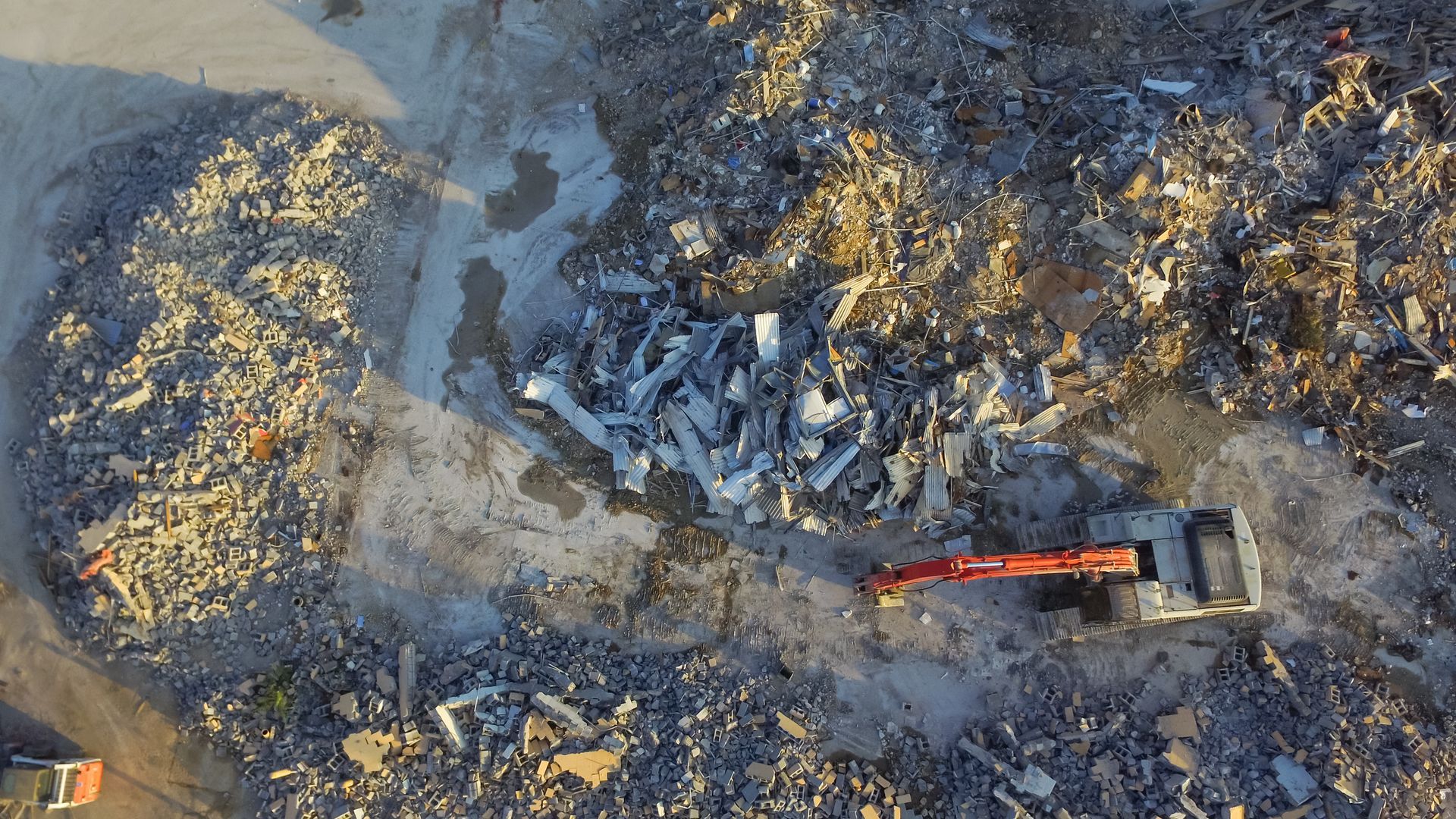
In addition to the chemical waste, the site was buried under:
- Scrap metal and rusted equipment
- Wooden pallets and building materials
- Household trash mixed with industrial debris
- Vegetation overgrowth and fallen trees
Our crews:
- Sorted recyclable metals from general waste
- Loaded debris into roll-off containers and dump trucks
- Hauled everything to appropriate facilities (landfills, recycling centers, metal scrap yards)
Total debris removed: 1,100+ cubic yards (55 truckloads).
Step 5: Transportation and Disposal
All waste was transported under DOT hazardous materials regulations:
- Placarded vehicles – Trucks displayed proper hazard class placards
- Licensed carriers – DOT-certified drivers with hazmat endorsements
- Manifested shipments – Every load tracked with EPA documentation
- Approved facilities – Waste sent to permitted TSDFs, incinerators, and recycling centers
Disposal methods used:
- Incineration – Flammable liquids and organic solvents
- Fuel blending – Compatible waste used as industrial fuel supplement
- Stabilization/solidification – Certain sludges treated before landfill disposal
- Recycling – Metals, plastics, and compatible materials recovered
- Secure landfill
– Non-hazardous waste and stabilized residues
Step 6: Final Documentation and EPA Clearance
At project completion, we provided:
- EPA manifests – Proof of legal disposal for every hazardous waste shipment
- Certificates of Disposal (CODs) – Verification from TSDFs that waste was received and processed
- Laboratory reports – Test results for all analyzed samples
- Photo documentation – Before, during, and after images
- Site certification letter – Confirming cleanup completion and regulatory compliance
The EPA issued a clean bill of health, certifying the property was safe for unrestricted use.
Results:
$35,000+ Saved, Zero Waste Generated
| Metric | Result |
|---|---|
| Timeline | 30 days from mobilization to EPA clearance |
| Hazardous containers | 1,000+ drums and vessels |
| Debris removed | 1,100 cubic yards (55 truckloads) |
| Field tests conducted | 1,000+ individual assessments |
| Lab samples analyzed | 100+ sent for full characterization |
| EPA violations | Zero |
| Final status | Property certified clean and marketable |
What this meant for the bank:
Liability eliminated –
No longer responsible for environmental contamination
Property marketable – Could be sold or leased without legal encumbrance
Balance sheet improvement – Asset moved from liability column to asset column
Cost certainty – Fixed-price project with no surprise expenses
Regulatory confidence – EPA clearance provided legal protection
METHODS USED in This Project
Hazardous waste identification – Field testing and laboratory analysis
Container repacking – DOT-compliant overpacking and labeling
Multi-hazard waste disposal – Acids, bases, flammables, corrosives, unknowns
Debris removal – Non-hazardous trash and scrap material
EPA coordination – Full regulatory compliance under federal oversight
Site restoration – Complete cleanup to certified safe condition
How We Succeeded in This High-Risk Environment
HAZWOPER expertise: Our field teams are trained specifically for hazardous waste site operations. They know how to assess risks, prevent exposure, and handle unknowns safely.
In-house analytical capability: We didn't have to wait weeks for outside labs. Our ability to perform field testing and coordinate rapid lab analysis kept the project moving.
Multi-agency coordination: Working with EPA, state DHEC, and local authorities requires experience and professionalism. We've done it hundreds of times.
Regulatory fluency: We know RCRA, DOT, CERCLA, and state rules inside and out. Every decision was compliant because compliance is built into our standard operating procedures.
Comprehensive service: Most contractors handle either hazardous waste or debris removal. We did both under one contract—no coordination delays, no finger-pointing.
EPA trust:
The fact that EPA allowed us to complete this project unsupervised (after initial oversight) speaks to our track record. They knew the job would be done right.
Industries WE SERVE
U.S. Waste Industries provides abandoned site remediation and hazardous waste cleanup for:
Financial Institutions:
- Foreclosed industrial properties
- Distressed asset portfolios
- Property redevelopment projects
Real Estate:
- Property acquisitions with environmental issues
- Brownfield site cleanup
- Pre-sale due diligence and remediation
Industrial:
- Facility closures
- Plant decommissioning
- Legacy contamination management
Government:
- Municipal property cleanup
- Superfund site support
- Emergency response assistance
REQUEST A QUOTE FOR ABANDONED SITE CLEANUP
Dealing with a contaminated or abandoned property?
Tell us what you know—location, property history, visible hazards, timeline needs.
Don't have all the details?
That's okay. We can conduct site assessments to help you understand scope and cost before committing to cleanup.
Related Projects